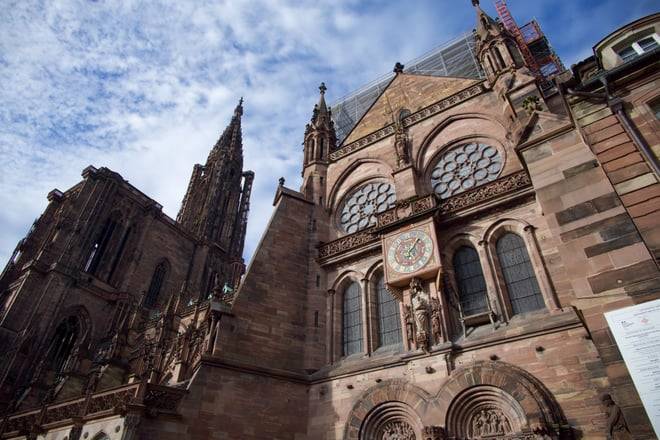
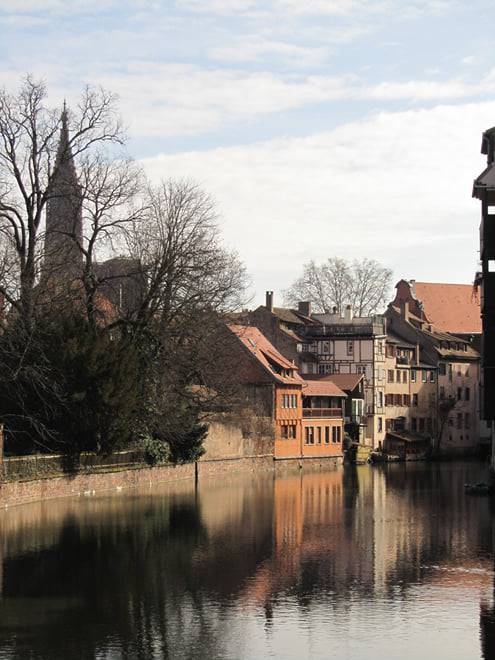
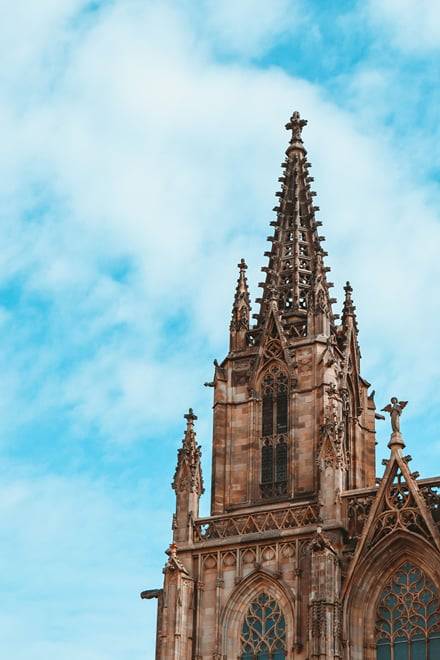
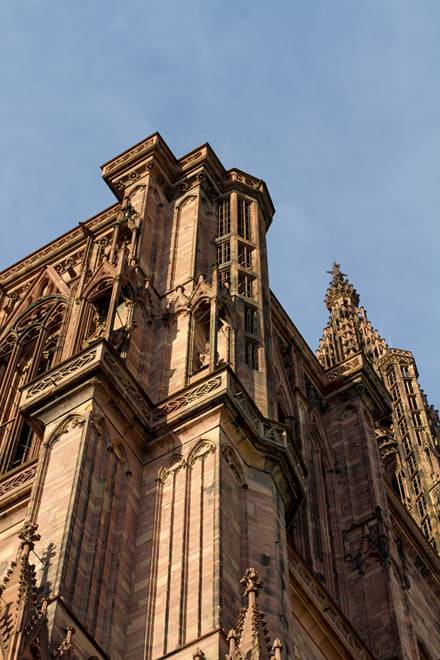
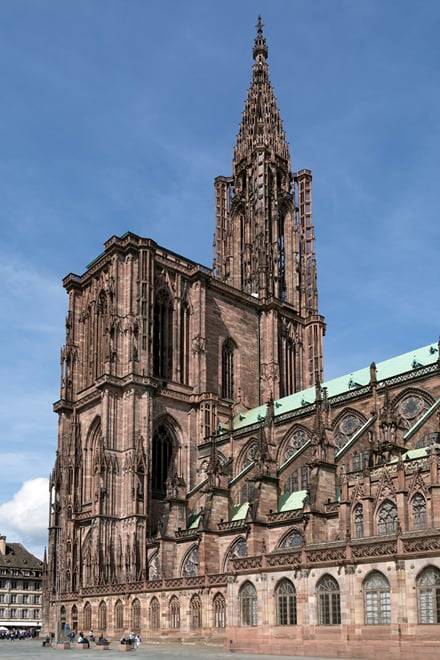
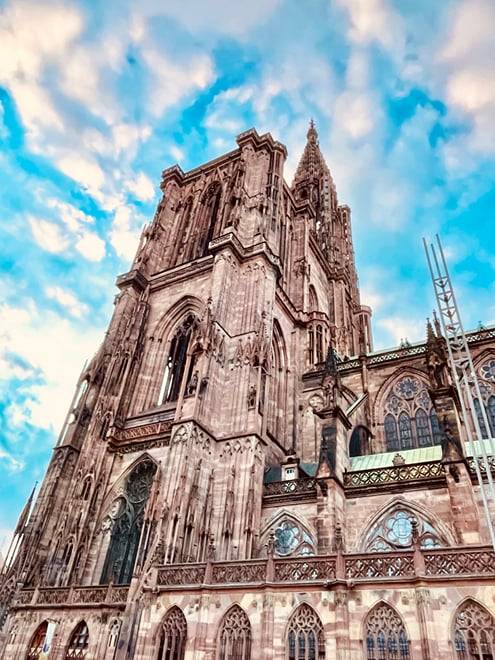
Strasbourg Cathedral has dominated the city skyline since the Middle Ages, its stonework and windows reflecting centuries of changing styles and civic pride. The west façade presents a remarkable array of sculpted portals and a prominent rose window, while the interior reveals chapels and a long nave crowned by ribbed Gothic vaulting. Attention to detail rewards careful observation: carved figures and reliefs carry complex symbolism tied to medieval belief and craftsmanship. The Pillar of Angels offers a striking example of expressive sculpture, and the cathedral houses an astronomical clock — a Renaissance mechanism rebuilt in the 19th century — that combines artistry with historic engineering. Walking the length of the nave beneath the soaring vaults provides a vivid sense of the architects' structural solutions and aesthetic aims. Contextual information links these architectural features to Strasbourg’s broader history, from its medieval importance through later restorations. Visitors leave with a richer appreciation of the cathedral’s artistic programmes, its technical achievements and its place at the heart of the city.
 Duration:
 Group: